





In 1882, France had 37 million inhabitants: 3 million of them did not speak French at all, and 9 million of them did not speak it fluently. Article 1 of the Ferry Act dated March 28th, 1882 on mandatory schooling stipulates that school 'teaches language and elements of French literature.'
Within a few years, all French people spoke and wrote French. The « elements of French literature » were texts of poetry learned by heart (La Fontaine, Hugo, Racine, Vigny, Musset, etc.) and literature (Voltaire, Chateaubriand, Montesquieu, etc.)
The letters from the « Poilus » (French soldiers in WWI) to their families between 1914 and 1918 show an excellent command of the French language. In a few years, the entirety of France spoke educated, beautiful French. This example illustrates the effectiveness of reading classical texts when learning a language.
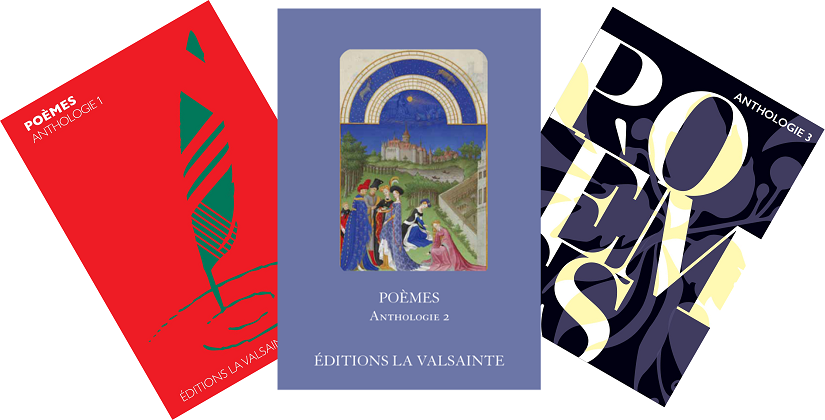
To make it affordable and convenient to read French poetry, we have launched the project of publishing small paperback anthologies, to take with you, anytime and everywhere.
This project is partially completed:
choose here
and
order here
.
During the 2010 13th Summit of Francophonie in Montreux (Switzerland), 50,000 copies of Anthology 1 have been distributed and shipped to numerous schools around the world, thanks to some Swiss, French and Canadian support.
These paperback anthologies make it easy to immerse one’s self in the poetic charm and soul of the magnificent French literature.
Our research at the University of Burgundy / Franche-Comté prove that these texts are simple and accessible.
The Doxilog project
demonstrates this scientifically by way of proprietary software: It also makes available "elements of French literature" using digital resources.
Access them with the list of selected texts!